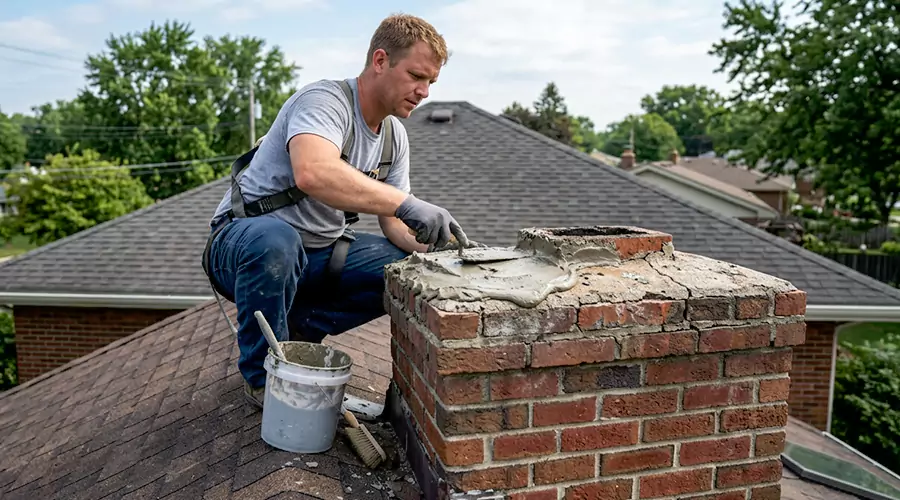
How to Know If You Need Chimney Crown Repair
A cracked chimney crown lets water into your masonry. Compare repair and replacement costs and get practical tips for protecting your chimney.




Based on 500+ Reviews

Proudly American
Owned & Operated

You likely need chimney crown repair when you see cracks, crumbling concrete, or signs of water entering the masonry below the crown. Minor surface damage can sometimes be sealed for a few hundred dollars. Severe deterioration may require rebuilding the crown and can cost up to $3,000 in 2026.
The chimney crown is the concrete or mortar surface at the very top of a masonry chimney. Its job is to direct rain away from the brickwork. Once the crown develops openings, water can penetrate the chimney and cause more extensive masonry damage.
A damaged crown usually shows visible surface changes or moisture problems around the chimney. Cracks are the most direct warning sign. Water stains and deteriorating brick can appear later because moisture has already moved through the crown into surrounding masonry.
Watch for these signs:
A cracked chimney crown should be inspected before the damage spreads. Even narrow cracks provide a path for water.
Chimney crowns crack because they face repeated exposure to rain and changing temperatures. Water can enter tiny openings in concrete. In freezing weather, trapped moisture expands and increases pressure inside the material. Repeated cycles can gradually widen existing cracks. Poor construction can also shorten crown life. A crown should direct water away from the chimney instead of allowing moisture to remain on its surface.
Common causes include:
A crown without enough overhang can also allow water to run directly down the chimney walls.
Crown deterioration often begins with small surface cracks and becomes more expensive after water reaches the masonry below. Early sealing can stop moisture entry when the underlying concrete remains sound. Large cracks or missing sections usually require more substantial repair.
| Damage Level | Common Condition | Typical Repair |
|---|---|---|
| Early | Hairline surface cracks | Crack sealing |
| Mild | Several narrow cracks | Crown coating |
| Moderate | Wider cracks | Patching and sealing |
| Advanced | Missing sections | Major crown repair |
| Severe | Crumbling structure | Crown replacement |
Ignoring early damage can allow moisture to reach the brickwork. Water can then contribute to mortar deterioration or spalling.
Chimney crown repair cost ranges from about $100 to $3,000 in 2026. The average reported cost is around $1,550. Small sealing projects sit near the lower end while extensive repairs or rebuilding move toward the upper range. Another 2026 cost source places basic crown repairs around $150 to $350. The wide difference reflects how the term "repair" can describe anything from filling small cracks to rebuilding a damaged crown.
| Type of Work | Typical 2026 Cost |
|---|---|
| Small crack repair | $100 to $350 |
| Surface sealing | $300 to $1,000 |
| Moderate repair | $750 to $1,500 |
| Major crown work | $1,000 to $2,500 |
| Full crown replacement | Up to $3,000+ |
The amount of deterioration matters more than the number of visible cracks.
Small cracks can often be sealed when the crown remains structurally sound. Flexible masonry products are commonly used because they can bridge minor surface openings while limiting water entry. Sealing is less suitable when concrete is loose or large sections have already broken away. A chimney crown sealer works best as an early repair rather than a substitute for rebuilding failed concrete.
Sealing may be appropriate when:
Large openings need a different repair approach.
Chimney crown replacement becomes more appropriate when deterioration affects the structure rather than only the surface. Deep cracks and missing pieces can mean the existing crown no longer provides a stable base for patching. Poor crown design can also make replacement more practical.
Replacement may be needed when:
Repeatedly applying sealant to severely deteriorated concrete can delay the correct repair without stopping water entry.
You can perform a basic visual check from the ground using binoculars or a camera with zoom. Look across the top of the chimney for visible cracks or missing material. Check the roof below for fragments that may have broken away. After heavy rain, inspect accessible indoor areas for water staining.
Also look for:
Do not climb onto a steep roof simply to inspect the crown. A ground-level check can identify warning signs without adding unnecessary fall risk.
Professional inspection becomes appropriate when cracks are wide or pieces of the crown are missing. Water entering the house is another strong reason for closer evaluation. A chimney professional can determine whether the crown needs sealing or reconstruction.
Professional help is particularly useful when:
A professional can also distinguish crown failure from a chimney cap or flashing problem. Water near a chimney does not automatically mean the crown is responsible.
Regular inspection is the simplest way to catch crown deterioration before water reaches the brickwork. Check the crown visually once a year and after severe weather. Small changes are easier to recognize when you already know what the surface looked like. Keep the chimney top free of obvious debris. Investigate new cracks instead of waiting for water to appear indoors.
Proper crown construction also matters. A sound crown should slope away from the flue and extend beyond the masonry so rainwater does not run directly down the chimney walls.
Chimney crown repair is usually needed when cracks or water-related masonry damage appear around the top of the chimney. Small surface defects may only need sealing while crumbling concrete can require complete replacement. Early repairs cost less than correcting widespread water damage. Check the crown from the ground this week and photograph any visible cracks so future changes are easier to identify.
Small cracks are easier to repair than large ones, but they can still allow moisture into the crown. They should be monitored and addressed before they widen.
Yes. Cracks in the crown can allow rain to enter the masonry and contribute to leaks around the chimney.
Repair life depends on the condition of the existing crown and the repair method. A badly deteriorated crown may need replacement rather than repeated sealing.
No. The crown covers the top of the masonry while the cap sits over the flue opening.
Yes. Small cracks can often be sealed or patched when the rest of the crown remains structurally sound.
Water can move into the masonry and contribute to brick deterioration or mortar damage. Continued exposure can eventually make a larger repair necessary.
A cracked chimney crown lets water into your masonry. Compare repair and replacement costs and get practical tips for protecting your chimney.
